Media Owners
Still Selling Screens? Why Media Owners Need Systems to Maximise OOH Revenue
Still selling OOH screens manually? Discover why media owners need systems to improve utilisation, automate workflows, and unlock scalable OOH revenue growth.

Staff Writer
Moving Walls
April 29, 2026

The Old Model Is Costing You More Than You Think
For years, OOH growth was simple: more screens meant more reach, and more reach meant more revenue. But today, that model is quietly eroding revenue through low utilisation, fragmented inventory, and slow sales cycles.
Today, that model is quietly breaking.
Because buyers are no longer paying for presence alone, they are paying for performance, measurability, and scalability. Premium locations still create value, but without structured inventory and accessibility, that value is harder to realise at scale.
You’re not just competing on quality anymore, you’re also competing on how easy you are to buy from.
From Manual Work to Scalable DOOH: Proof in Action
This shift is already happening in the market, not as theory, but in real operations.
In Japan, transit media owner Jeki transformed how it manages over 36,000 screens by replacing manual workflows with a centralized system. The result was a significant reduction in operational friction, including an 85% drop in repetitive manual work, along with faster campaign activation and more scalable execution.
By integrating Moving Walls’ infrastructure into its ecosystem, Jeki created a single, automated layer for planning, pricing, and activation, allowing campaigns to be launched faster, managed more efficiently, and scaled across its network with greater control.
This demonstrates a clear shift: when inventory is structured, and workflows are automated, OOH doesn’t just become measurable, it becomes operationally scalable and commercially accessible.
The Real Gap: Value Exists, But It’s Not Monetized
Here’s where most media owners are stuck and where you need to be brutally honest.
Even with better measurement:
- Your inventory is still fragmented
- Your data is not standardized
- Your insights are not embedded into sales
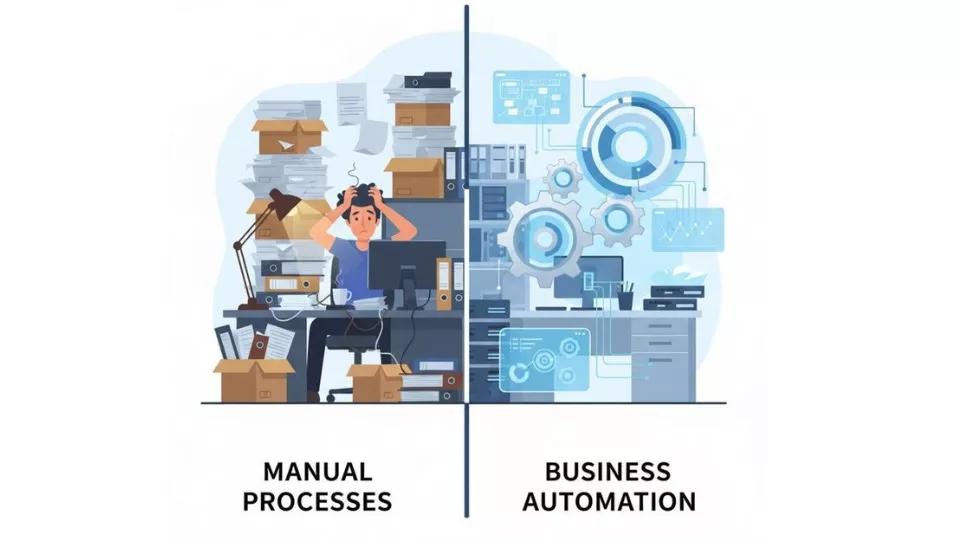
- Your buying process is still manual
So what happens in reality?
Buyers struggle to discover your inventory. Campaign planning becomes slow. Scaling across locations becomes painful. Pricing becomes inconsistent.
And eventually, demand moves toward platforms where execution is easier.
Not because those platforms have better inventory, but because they have better systems.
The Hidden Operational Problem No One Talks About
Before measurement, before programmatic, before scale, there’s a more immediate problem most media owners are dealing with every day.
Inventory is still being managed across spreadsheets, emails, and disconnected systems.
- Availability checks are manual, delaying response time
- Campaign planning relies on back-and-forth coordination, slowing execution
- Data sits in silos across formats, regions, and teams, limiting scalability
By the time a proposal is ready, the opportunity has already slowed down, or worse, moved elsewhere.
This isn’t just inefficient. It directly impacts revenue.
Because in a market where buyers expect speed and flexibility, manual workflows create friction that demand will not wait for.
OOH Doesn’t Need More Tools. It Needs an Operating Layer That Connects Everything
Most solutions in the market try to replace what you already have.
That’s the wrong approach.
Media owners don’t need another platform that forces migration or creates dependency. What they need is an operating layer, one that sits on top of existing infrastructure and connects everything together.
This is where Moving Walls takes a fundamentally different approach.
Instead of acting as a closed ecosystem, it works as an agnostic OS that integrates with your current CMS, SSPs, and data sources, structuring inventory without disrupting your existing setup.
Systems Don’t Support Sales They Remove Its Limitations
Treating systems as a “support tool” for sales is where most media owners get it wrong. Systems don’t just make existing processes more efficient, they eliminate the structural limitations of manual selling altogether.
When inventory is standardised, it becomes easier to package and present. When measurement is integrated, performance becomes part of the pricing conversation instead of an afterthought. When buyers can access inventory in real time, transactions move faster and with less dependency on back-and-forth communication.
The result is not just operational efficiency, it’s a fundamentally different revenue model. One that is scalable, repeatable, and far less dependent on individual sales effort.
What This Means for Revenue, Not Just Operations
This shift is not about technology adoption for the sake of it. It directly impacts how revenue is generated and sustained.
When systems are in place, media owners are able to unlock the true commercial potential of their inventory. Value becomes visible, utilisation improves, and pricing becomes more consistent and defensible. Campaigns are no longer limited by manual coordination, allowing demand to scale across locations and markets.
Without systems, growth remains constrained. Revenue depends on one-off deals, negotiations take longer, and opportunities are often lost due to operational friction.
At that point, the limitation is no longer demanded, it’s the ability to capture it.
As inventory becomes structured, the opportunity shifts from selling space to activating audiences. With MW Influence, campaigns can respond dynamically to audience movement and real-world conditions unlocking demand that static planning cannot capture.

The Industry Has Already Shifted
OOH is no longer evolving slowly. It has already moved into a model where measurement, data, and accessibility define success.
What used to be a medium driven by location and visibility is now being shaped by performance and scalability. Buyers expect the same level of ease and accountability they experience in digital channels and they are directing budgets accordingly.
Media owners who adapt to this shift are building scalable revenue engines. Those who don’t are gradually being left behind, not because their inventory lacks value, but because it lacks accessibility.
Stop selling inventory the old way. Start building a system that scales revenue.
If your inventory is measurable but not structured, accessible, or easy to transact, you’re not capturing its full value. Platforms like Moving Walls enable media owners to standardise inventory, integrate measurement, and unlock scalable demand.
The shift is already happening. The question is whether your revenue model is keeping up.
Tags:Media Owners
Related Articles


Enjoyed this article?
Subscribe to get the latest insights, tips, and industry news delivered straight to your inbox.