February 5, 2026
Digital Media in 2026: Why Agencies Must Rethink Media Mixes
The digital definition is outdated
For years, “digital media” has largely meant ads on mobile, desktop, and social platforms. In 2026, digital is better defined by what a channel can do, such as data-driven targeting, automation, dynamic content, and measurable outcomes, rather than by the device it appears on. This shift reflects how attention is now spread across streaming, and other formats, rather than concentrated in one place.
By this definition, modern DOOH clearly qualifies as digital. It is bought programmatically, uses data to target relevant audiences, and is projected to account for nearly half of global out-of-home spend in several key markets by 2028. This places DOOH firmly within digital media planning, rather than in a separate “offline” or “OOH” category.
Treating “online” and “offline” as separate worlds can distort media planning. People move through their day encountering many types of screens, without noticing clear boundaries between them. Recent McKinsey’s research suggests planning should reflect how people notice, process, and make decisions, not how media channels are classified. As a result, media plans should account for all screens consumers interact with throughout their day.
How consumer behaviour is evolving as we enter 2026
Attention is increasingly less anchored to a single ‘main screen’. It now flows across streaming, social, audio, gaming, and the physical environments people move through each day. Among Gen Z in particular, attention is highly fragmented, with no single channel accounting for more than 20% of total attention, according to Elevate’s EPIC data.
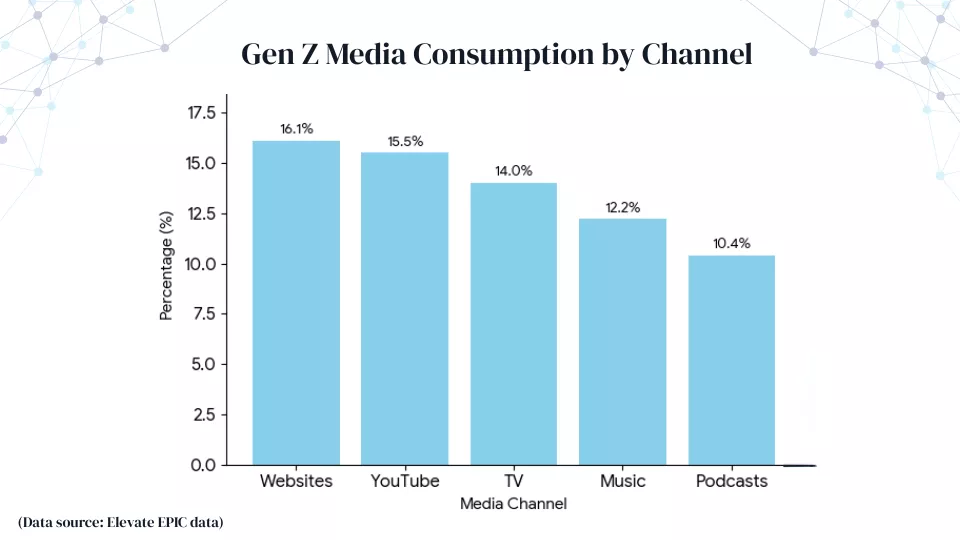
Source: Elevate EPIC
At the same time, challenges in digital advertising have intensified. Banner blindness remains widespread, with a large share of users routinely ignoring standard display formats after repeated exposure. As similar creative structures appear across platforms, ad fatigue can limit engagement and reduce the effectiveness of traditional digital placements.
These shifts appear structural rather than short-term. Audience attention is increasingly fragmented across platforms and physical locations, suggesting that media plans focused only on phones and laptops may miss a growing share of real-world attention. Digital out-of-home (DOOH) helps address this gap by reaching people during commutes, shopping, and social activities, when they are already engaged in the physical world.
The Limits of Traditional “Digital-Only” Mixes
As digital environments become more crowded, brands are finding it harder to reach new audiences and stand out. When budgets concentrate on a small number of platforms, algorithms tend to recycle spend within the same audience pools instead of expanding exposure. In this context, launching more variations of social or display campaigns often produces diminishing returns.
For agencies accountable for KPIs such as incremental reach, engagement, and conversions, DOOH functions as a performance amplifier, extending reach beyond saturated digital environments and enhancing outcomes when synchronized with mobile, search, or retail media.
A more effective approach is to view digital as extending into physical spaces. Including DOOH in the mix allows brands to reach people in more real-world moments while keeping campaigns measurable and performance-driven.
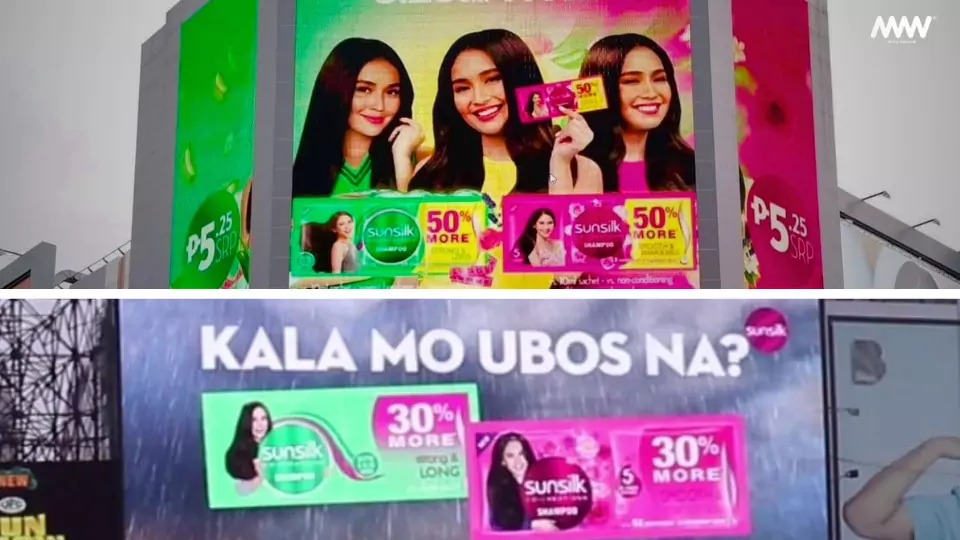
Source: Sunsilk x Moving Walls
DOOH as the New Digital Channel
Digital Out-of-Home (DOOH) represents digital media finally stepping into the real world powered by the same kind of data, automation, and measurement used online. Programmatic DOOH continues to grow year-on-year across multiple markets and has evolved far beyond static billboards into a flexible, responsive channel that can be:
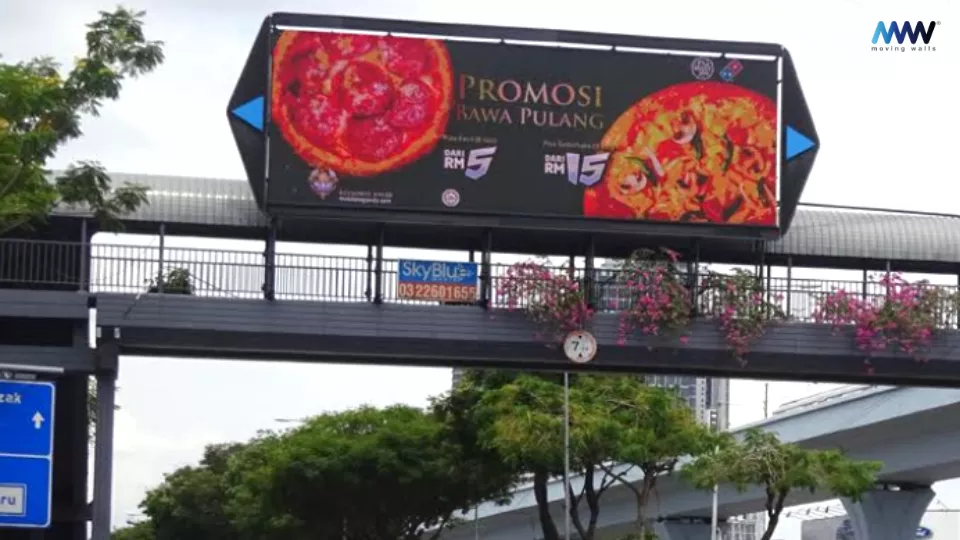
Source: Moving Walls
- Programmatic and data-driven: Campaigns can be activated via DSPs, optimized, and triggered based on audience movement, time of day, or real-time signals like weather or traffic.
- Targetable and contextual: Brands can select locations near stores, transit hubs, neighborhoods, or venues, aligning messages with specific contexts and contexts.
- Measurable and connected: When exposure data is connected to actions like store visits or app usage, campaigns can be evaluated by real outcomes, not just impressions. Amazon’s Brand Lift meta-analysis found that combining display and video ads drove a 2.2x higher brand awareness lift versus using video ads alone, reinforcing that integrated media plans can deliver stronger results across the funnel.
Industry forecasts indicate that DOOH is capturing an increasing share of total OOH spend. Programmatic DOOH spend is expected to exceed$1.3 billion USD by 2026, reflecting its role as a bridge between physical presence and digital intelligence, delivering scale and real-world impact while remaining fully compatible with digital tools and workflows.
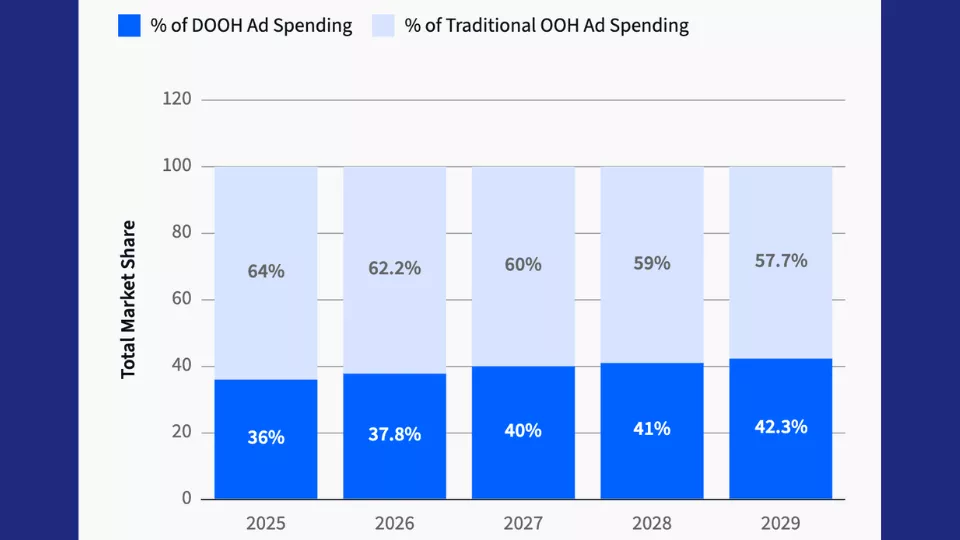
Source: Emarketer
From Awareness to Performance: DOOH Across the Funnel
The outdated belief that DOOH is only for awareness no longer holds true. DOOH now contributes across the entire marketing funnel when integrated with other digital touchpoints:
- Upper funnel: Large-format, high-visibility screens build brand awareness which is more effective than small mobile units
- Mid funnel: Contextual placements near stores, business districts, or lifestyle venues reinforce messages seen online, during relevant decision moments
- Lower funnel: When synced with mobile, search, or app campaigns, DOOH can drive measurable outcomes such as store visits, app installs, or search lift by reaching users just before or after exposure
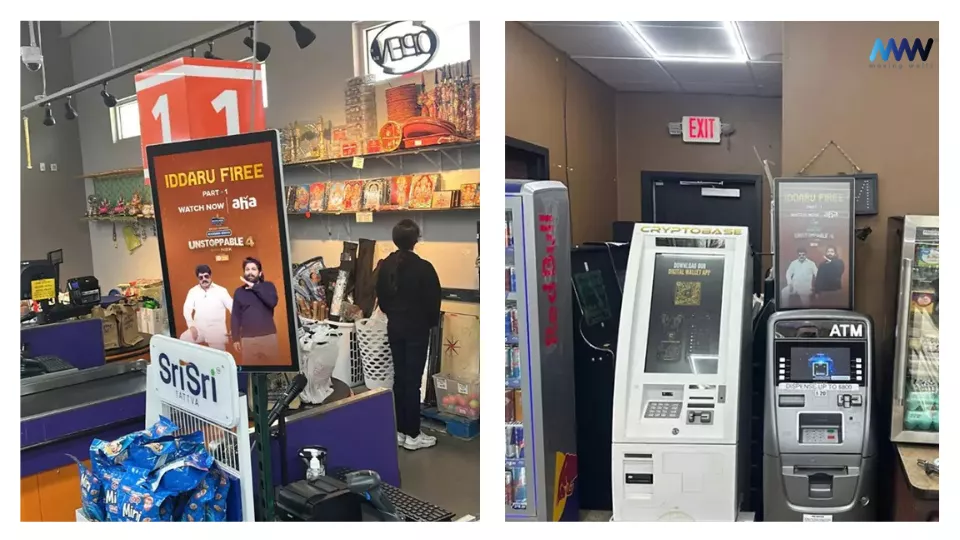
Source: AHA x Moving Walls
The true power of DOOH emerges when it is planned as an integral part of the digital ecosystem, leveraging common audiences, coordinated messaging, and shared measurement, rather than treated as a standalone channel.
What Agencies Must Rethink
To reflect how people increasingly live and move as we enter 2026, agencies need to shift both mindset and process:
- Start from journeys, not channels: Planning should map real consumer days, commuting, shopping, scrolling, relaxing, and then assign roles to each touchpoint, including DOOH, instead of forcing ideas into “digital vs offline” boxes, categories
- Organize teams around planning: Digital, OOH, and brand teams should collaborate around common audience and outcome goals, with DOOH specialists integrated into digital planning from the start
- Update measurement frameworks: Move beyond last-click or siloed reporting to models that recognize cross-channel influence, including how DOOH enhances performance for search, social, or retail media
- Evolve client conversations: Shift the discussion from “Should we add some DOOH?” to “How do we design an omnichannel experience that follows our audience from online into the real world and back?”
This isn’t just about how agencies are organized; it also reflects an ongoing evolution in culture and ways of working across the industry as audience behavior and tools continue to change.
Conclusion
Digital today is not limited to phones or laptops; it includes any channel that uses data, automation, and measurement to reach people where they actually are. When integrated into the digital mix, DOOH extends campaigns into real-world environments and connects media exposure to tangible audience actions. This enables agencies to evaluate performance based on outcomes, not just impressions. Leverage Moving Walls to integrate DOOH and connected channels into your campaigns today, capturing audiences where they are and staying ahead in the evolving media landscape.
Scale up your OOH Ads with better ROAS today.